Control Resonant Review: Remedy's Bold Melee Action Shift
Read our in-depth Control Resonant review to see if Remedy's shift to melee combat and an open-world New York succeeds. Discover gameplay tips and more!
Published:
Table of Contents
Remedy Entertainment has built a reputation on "weirdness," blending supernatural bureaucracy with tight third-person shooting. However, as this control resonant review will explore, their latest venture is a massive departure from the established formula. By stepping out of the brutalist confines of the Oldest House and into a fractured, Inception-style New York City, Remedy is taking its biggest risk yet. Whether you are a die-hard fan of Jesse Faden or a newcomer to the Federal Bureau of Control (FBC), this sequel demands a total recalibration of your expectations.
In this comprehensive control resonant review, we will break down the shift from firearms to the shapeshifting Aberrant weapon, the transition to a Metroidvania-inspired open world, and the technical wizardry that powers this hauntingly beautiful depiction of Manhattan. While the game has sparked significant debate within the community regarding its new protagonist and combat pacing, there is no denying that Remedy has crafted something utterly unique.
A New Director: Dylan Faden’s Journey of Redemption
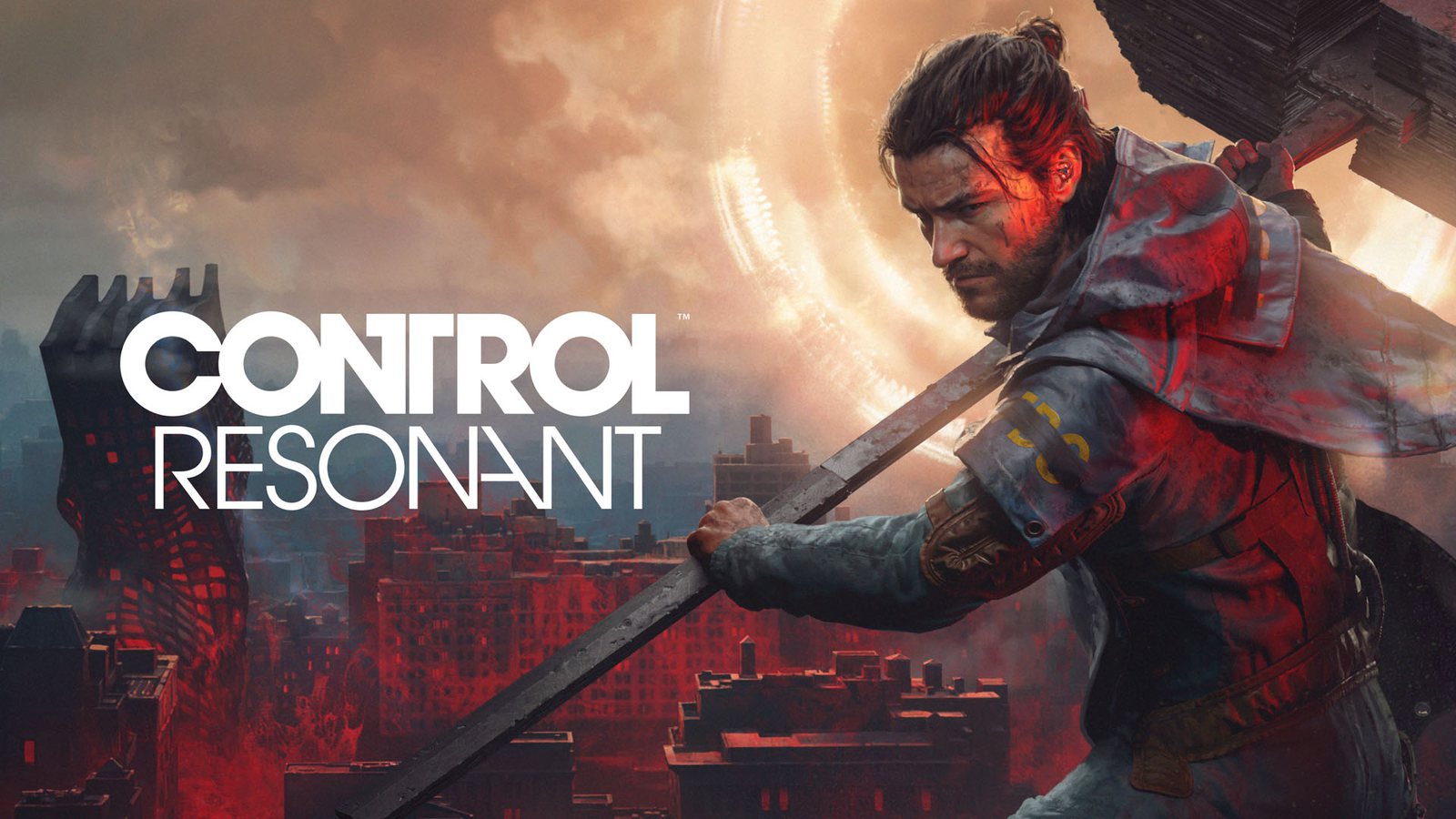
The story of CONTROL Resonant picks up seven years after the events of the original game. The Hiss, the resonant paranormal entity that nearly consumed the FBC, has finally breached the walls of the Oldest House, spilling out into the streets of New York. In a surprising narrative pivot, Jesse Faden is no longer the primary playable character. Instead, players step into the shoes of her brother, Dylan Faden.
Dylan’s presence is immediately polarizing. Having spent much of the first game as a primary antagonist or a comatose patient, his transition to a hero seeking redemption is fraught with narrative tension. According to community reports, players find Dylan to be a more "socially awkward and aloof" protagonist compared to the charismatic Jesse. However, this fits the theme of a man reckoning with his past sins while trying to navigate a world that rightfully distrusts him.
The narrative structure has also evolved. While the first game felt like a paranormal procedural, Resonant feels more like a psychological odyssey. The "signature Remedy weirdness" is present in spades—expect fourth-wall-breaking moments, musically driven set pieces, and a "Mind Palace" system (similar to Alan Wake 2) where Dylan can retreat into a mental void to upgrade his abilities and process the story.
The Aberrant: Redefining Remedy’s Combat
The most significant change discussed in any control resonant review is the combat. Remedy has traded the Service Weapon’s gunplay for the Aberrant, a paranatural melee relic that can shift its form on the fly. This moves the game closer to the "character action" genre, drawing comparisons to titles like Devil May Cry or Ninja Gaiden, albeit with a slower, more deliberate weight.
Weapon Forms and Customization
At the start of the journey, you choose one of three primary forms for the Aberrant. Each form dictates your rhythm in battle, and eventually, you can unlock all of them to switch between during combat.
Weapon Form
Combat Focus
Ideal Scenario
Quick Stance
High speed, low reach
One-on-one duels with fast enemies
Balanced Stance
Moderate speed and reach
General exploration and mixed groups
Heavy Arc
Wide sweeping attacks, high damage
Crowd control against "spongy" hordes
Beyond the basic swings, the combat relies on the "Falter" system. As you strike enemies, you fill a falter meter; once full, you can execute a cinematic finisher. These finishers aren't just for show—they grant a "Dominance" buff, a short window where Dylan becomes significantly more powerful, allowing you to chain kills together.
Mastering animation cancels
Dylan features one of the most generous animation cancel windows in modern action games. You can cancel almost any attack into a dodge up until the very last frame, making it essential to play aggressively but remain ready to shift at a moment's notice.
Navigating a Fractured New York City
Remedy’s first foray into open-world design is not a traditional one. While the map is filled with markers—a design choice that has received mixed feedback—the actual flow of the game is more akin to a 3D Metroidvania. The city is divided into distinct zones, such as a mold-infested park or a gravity-defying apartment district.
Traversal and Gravity Manipulation
The real star of the exploration is Dylan’s suite of paranatural abilities. Unlike Jesse’s relatively straightforward levitation, Dylan’s movement is about mastering the environment's broken physics.
Ability
Function
Gameplay Impact
Gravity Shift
Change Dylan’s gravitational center
Walk on walls or ceilings to find hidden paths
Grapple
Rapidly pull Dylan toward objects
High-speed repositioning during vertical combat
Floating Jump
Extended air time
Crossing large gaps in the fractured skyline
Double Air Dash
Mid-air horizontal movement
Essential for dodging projectiles in "bullet hell" boss fights
Community feedback suggests that the world map can be "annoying to read" due to the verticality of the levels. A 2D map simply cannot represent a city where you might be standing on the underside of a bridge while the objective is technically "above" you on a different planar axis. Players are encouraged to ignore the markers occasionally and follow environmental cues, as some of the best side quests are hidden in unmarked locations.
Technical Mastery: Path Tracing and DLSS 4.5
From a technical standpoint, CONTROL Resonant is a showcase for the latest in rendering technology. On PC, the game utilizes Nvidia's full suite of RTX features, including Path Tracing, which provides the most accurate recreation of light and reflections seen in a city environment to date.
For players on the official Steam version, the inclusion of DLSS 4.5 with dynamic multi-frame generation is a game-changer. Path tracing is incredibly taxing, but with multi-frame generation, players can achieve smooth frame rates even at 4K resolution.
Path Tracing: Enhances the bioluminescent mold and reflective puddles of New York.
Ray Reconstruction: Reduces visual noise in AI-upscaled images.
Performance Mode (PS5 Pro): Targets a stable 60 FPS, though minor graininess on metal surfaces has been reported by some users.
The "Spongy" Enemy Dilemma
One common critique found in many a control resonant review is the health pool of standard enemies. Early in the game, combat can feel like a "tedious grind" because enemies take a significant number of hits to defeat. This is a deliberate design choice by Remedy to encourage "buildcrafting."
The game’s progression system is "lumpy." You might feel underpowered for hours until you stumble upon a specific "Fault"—a traversal puzzle featuring Jesse Faden—that grants a new ability. For example, combining fire-based status effects with mold turrets can shred enemy health, but if you haven't found those specific upgrades, the combat remains challenging.
Enemy Type
Combat Behavior
Strategy
Resonant Stalkers
Invisible enemies that slink into shadows
Use Gravity Shift to stay mobile and flush them out
Hiss Sharpshooters
High-damage projectiles from rooftops
Use the Grapple to close the distance immediately
Mold Hosts
Explode upon death, leave lingering clouds
Use wide-arc attacks and dash away before the killing blow
Polarizing Boss Design
The bosses in CONTROL Resonant are a point of contention. Visually, they are "S-tier" creations. One encounter features the gigantic severed head of an artist surrounded by a halo of floating debris, turning the fight into a spectacular bullet-hell experience. However, mechanically, some players feel the bosses don't always take full advantage of the melee system.
The "Mold Boss" is often cited as the best encounter because it requires the player to use every tool in their kit: fighting adds, dodging projectiles, and shifting gravity to reach vulnerable points on different planes. Other bosses, unfortunately, can feel like "meat sacks" where the player simply wails on them while avoiding easily telegraphed attacks.
Final Verdict: Is It Worth It?
CONTROL Resonant is a game of immense creative energy. It is a "genre-bending work of originality" that refuses to play it safe. While the transition to an open world brings some typical "busywork" and the melee combat has a steep learning curve, the art direction and technical execution are unparalleled.
If you go into this game expecting "Control 2.0" with Jesse Faden and a service pistol, you might be disappointed. But if you approach it as a bold new chapter in the Remedy Connected Universe—one that trusts the player to figure things out without excessive hand-holding—you will find one of the most imaginative games of the year.
Quick VerdictCONTROL Resonant is a masterpiece of art design and technical innovation. While the melee combat starts slow and the map can be confusing, the depth of the world and the complexity of the late-game mechanics make it a must-play for fans of atmospheric action games.
FAQ: Everything You Need to Know
Do I need to play the first Control before starting Resonant?
While a control resonant review might focus on the new mechanics, the story is a direct sequel. The game includes a "Previously On" video to catch you up, but having knowledge of the FBC, the Hiss, and Dylan's history from the first game significantly enhances the experience.
Is Jesse Faden in Control Resonant?
Jesse Faden appears in "Faults," which are specific traversal and puzzle sequences scattered throughout the city. While she is not the main protagonist this time, her presence is vital to Dylan’s progression and the unlocking of new movement abilities.
How long is the game?
A standard playthrough of the main story takes about 30 hours. However, if you engage with the authored side quests and clear all the map markers, you can easily spend 50+ hours in this twisted version of New York City.
What are the best settings for PC performance?
If you have an RTX card, enabling DLSS 4.5 and Ray Reconstruction is highly recommended. This allows you to enjoy the path-traced lighting without sacrificing a smooth frame rate, which is crucial for the game's fast-paced melee encounters.