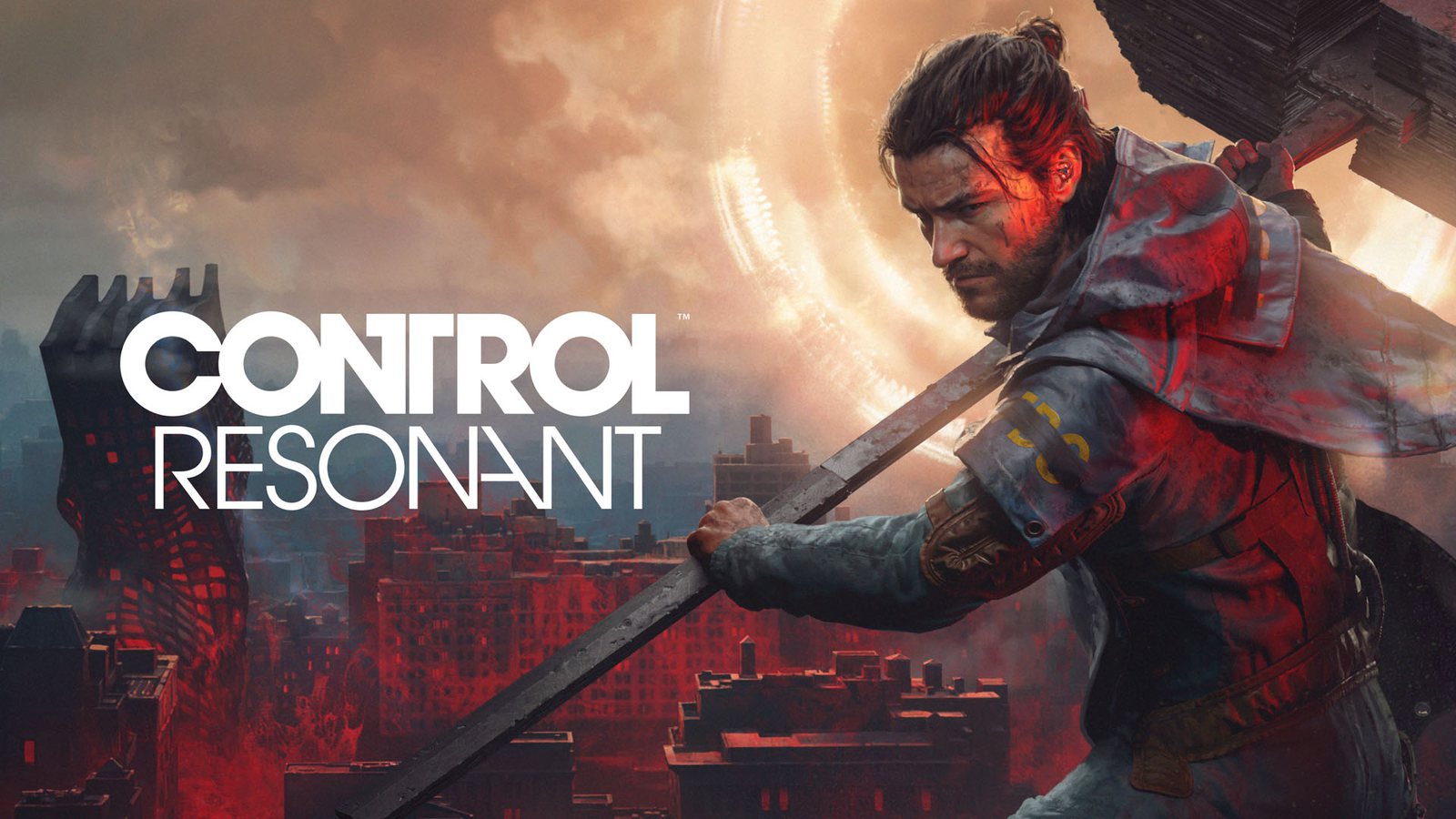
Control Resonant vs Control: 10 Massive Gameplay Changes
Discover the massive shifts in Remedy's latest sequel. From melee combat to open-world Manhattan, see how Control Resonant vs Control stacks up today.
Published:
Table of Contents
When Remedy Entertainment first released the original Control in 2019, it redefined the "New Weird" genre in gaming, trapping players within the claustrophobic, brutalist hallways of the Oldest House. Now, with the launch of the highly anticipated sequel, the conversation surrounding control resonant vs control has reached a fever pitch. Fans are eager to know if this new entry is a simple iteration or a complete structural overhaul of the formula that made Jesse Faden’s journey so iconic.
The primary shift in control resonant vs control lies in the core philosophy of the experience. While the first game was a tightly wound Metroidvania-style third-person shooter, CONTROL Resonant pushes the franchise into the realm of action-RPGs. By moving the setting from a shifting office building to the warped streets of Manhattan, Remedy is challenging everything players thought they knew about the Federal Bureau of Control (FBC).
Quick Answer: The Core EvolutionCONTROL Resonant shifts the series from a linear Metroidvania shooter to a semi-open-world action-RPG. The most significant changes include the protagonist swap from Jesse to Dylan Faden, the transition from ranged firearms to the melee-focused "Aberrant" weapon, and the introduction of path-traced graphics powered by DLSS 4.5.
Protagonist and Narrative: Jesse vs. Dylan Faden
One of the most jarring differences when comparing control resonant vs control is the change in perspective. In the original title, players controlled Jesse Faden, the newly appointed Director of the FBC, as she searched for her brother. In CONTROL Resonant, the script is flipped. Players now step into the shoes of Dylan Faden, Jesse’s brother, who has been released from FBC custody to help contain a new extradimensional threat.
From a visual and narrative standpoint, Dylan is the antithesis of Jesse. While Jesse’s look was grounded and professional—often seen in leather jackets or formal Director attire—Dylan appears unkempt, sporting messy hair and a prison jumpsuit. This isn't just a stylistic choice; it reflects his status as a "semi-reluctant prisoner" and a powerful parautilitarian who views the supernatural world through a much darker lens.
Community reports suggest that this shift allows for a more "visceral" narrative. Jesse’s story was about taking control of an institution, whereas Dylan’s story is about reclaiming his humanity in a world that sees him as a weapon. This narrative inversion is a cornerstone of the control resonant vs control debate, as it fundamentally changes how players interact with NPCs like the FBC handlers and the civilians still trapped in Manhattan.
Feature
Control (2019)
CONTROL Resonant (2026)
Protagonist
Jesse Faden
Dylan Faden
Primary Goal
Find Dylan / Save the FBC
Contain Manhattan / Find Jesse
Tone
Corporate Surrealism
Urban Apocalypse
Narrative Style
Linear with side missions
Choice-driven with consequences
Combat Mechanics: The Service Weapon vs. The Aberrant
If you enjoyed the gunplay of the first game, the combat in control resonant vs control will be a significant adjustment. The original Control relied heavily on the Service Weapon, a modular firearm that could transform into a pistol, shotgun, or sniper rifle. Dylan, however, eschews traditional firearms in favor of the "Aberrant"—a morphing metal rod that emphasizes high-octane melee combat.
The Aberrant can transform into various melee armaments, allowing Dylan to slice through Hiss-infected enemies or crush supernatural entities with heavy strikes. Remedy has stated that this shift toward melee was a "natural progression," aiming to make the player feel more connected to the physics-based destruction the engine is famous for. While Jesse fought from a distance using telekinesis and bullets, Dylan is a "brawler" who thrives in the thick of the fight.
According to developer insights, the Aberrant is an expression of Dylan’s personality—unpredictable and raw. Players can equip up to three melee forms at once, creating a "combat flow" that rewards aggressive positioning. This is a departure from the "cover-and-launch" tactics that dominated the original game's encounters.
Key Combat Differences
Weaponry: Jesse used the Service Weapon (ranged); Dylan uses the Aberrant (melee).
Enemies: Enemies in Resonant have more distinct combat roles, requiring specific melee counters.
Engagement: You are no longer always locked behind "Hiss barriers." In the open streets of Manhattan, you often have the choice to engage or retreat.
World Design: The Oldest House vs. Warped Manhattan
The setting is perhaps the most visible change in the control resonant vs control comparison. The Oldest House was a masterpiece of interior level design, characterized by shifting walls and hidden rooms. CONTROL Resonant takes the action outdoors, presenting a "semi-open world" version of downtown Manhattan.
However, this isn't a standard New York City. The supernatural invasion has warped the geography, turning roads at 90-degree angles and stretching skyscrapers into impossible shapes. The "Resonance Cycle" is a new mechanic where the world evolves based on your actions. Defeating a major boss doesn't just grant a reward; it can permanently alter the layout of a district, introducing new hazards or opening previously inaccessible vertical paths.
Exploration Strategy
Unlike the first game's keycard system, Resonant uses "Radio Towers" and fast-travel points to manage its larger map. Focus on unlocking these early to navigate the verticality of warped Manhattan more efficiently.
Environment Aspect
The Oldest House (Control)
Manhattan (Resonant)
Structure
Metroidvania / Interconnected Rooms
Semi-Open World / Large Zones
Traversal
Walking / Levitation
Gravity-defying / Parkour / Fast Travel
Visual Theme
Brutalist Architecture
Urban Decay / Reality Warping
Dynamic Changes
Shifting rooms (Scripted)
Resonance Cycle (Player-driven)
Progression and RPG Systems: The Shift to "Action-RPG"
When discussing control resonant vs control, we must address the deepening of the game's mechanics. The original Control had a light progression system involving ability points and weapon mods. CONTROL Resonant fully commits to being an action-RPG. This means character statistics, multiple talent trees, and a focus on "builds."
Interestingly, Dylan doesn't level up in the traditional sense. Instead, the "Zones" he operates in gain experience. Completing activities in a specific district levels up that zone, which in turn provides Dylan with talent points and better loot drops. This creates a symbiotic relationship between the player and the world.
Furthermore, the "Gap"—a metaphysical space connected to Dylan—replaces the standard menus of the first game. In the Gap, players can physically walk through their upgrade paths and test new augmentations in a safe environment. This is a clear evolution from the control points used by Jesse.
Progression Comparison Table
System
Control (Original)
CONTROL Resonant
Leveling
Ability Points for Jesse
Zone-based progression
Upgrades
Simple Menu-based
"The Gap" (Physical space)
Customization
Weapon/Personal Mods
Deep Talent Trees / Stats
Replayability
Single save / Linear path
Multiple save slots / Specialized builds
Technical Evolution: Path Tracing and DLSS 4.5
For PC enthusiasts, the technical leap in control resonant vs control is staggering. While the 2019 original was a benchmark for early ray tracing, the sequel utilizes full path tracing to illuminate its warped version of New York. This results in much more realistic light bounces, especially in outdoor environments with diffused materials like asphalt and metal.
Remedy has collaborated closely with Nvidia to implement "RTX Mega Geometry." This technology allows for incredible geometric detail without a massive hit to performance by optimizing how the engine handles complex 3D models. When comparing the two games on high-end hardware like the Alienware 18 Area 51, the difference in image clarity—especially for fast-moving objects—is night and day thanks to DLSS 4.5.
Technical Highlights in Resonant:
Path Tracing: Replaces standard ray tracing for superior global illumination.
DLSS 4.5: Uses a second-gen transformer model for better clarity.
RTX Mega Geometry: Enables higher poly counts for Dylan’s model and the environment.
Physics: Scaled up from office supplies to taxi cabs and construction scaffolding.
Player Agency: Dialogue and Consequences
In the original game, dialogue was primarily a vessel for lore and mission objectives. In the sequel, Remedy has introduced dialogue choices that carry weight. While the game still features one main ending, your interactions with FBC characters like Zoe and the remaining civilians of Manhattan will shape Dylan’s relationships and the outcome of various world quests.
This increase in player agency is a direct response to community feedback. Players wanted to feel like their presence in the world mattered beyond just killing Hiss. In control resonant vs control, the sequel feels more alive because the world reacts to your words as much as your Aberrant strikes.
Specialization Matters
Remedy has confirmed that you cannot unlock every talent in a single playthrough. Your choices in "The Gap" will force you into specific playstyles, making multiple concurrent campaigns (now supported via multiple save slots) a necessity for completionists.
Comparing the Gameplay Loop
The gameplay loop of control resonant vs control highlights the transition from "containment" to "survival." In the first game, you were clearing rooms and finding keycards. In Resonant, you are exploring zones, activating radio towers, and managing the Resonance Cycle.
Exploration: Venture into a warped Manhattan district.
Engagement: Choose to fight or bypass enemies using Dylan's melee prowess.
Progression: Level up the Zone to earn talent points and unlock new Aberrant forms.
Transformation: Defeat a "Resident" boss to permanently change the world map.
Refinement: Enter "The Gap" to specialize your build for the next challenge.
Why the Change to Melee and Open World?
Many fans wonder why Remedy decided to change so much in the control resonant vs control transition. Creative Director Mikael Kasurinen explained that the two games are meant to be "expressions of the two different siblings." Jesse’s game was about order and precision (shooting), while Dylan’s game is about chaos and raw power (melee).
The move to a semi-open world also allows for a larger "game board." By stepping out of the Oldest House, Remedy can play with larger-scale physics. Tossing a stapler at a Hiss guard is fun, but using gravity-defying powers to drop a taxi cab on a Resident boss is a completely different level of spectacle.
FAQ: Control Resonant vs Control
Is Control Resonant a direct sequel to the first game?
Yes, CONTROL Resonant is a narrative sequel that takes place after the events of the 2019 game. However, it features a new protagonist, Dylan Faden, and moves the setting to Manhattan. Remedy has stated it is designed to be accessible to new players while rewarding returning fans.
How does the combat in Control Resonant vs Control differ?
The original Control was a third-person shooter centered around the Service Weapon. CONTROL Resonant is a melee-focused action-RPG where players use a shapeshifting tool called the "Aberrant." While telekinetic powers return, the focus is on close-quarters combat rather than gunplay.
Can I play as Jesse Faden in the sequel?
In CONTROL Resonant, the lead protagonist is Dylan Faden. While Jesse Faden is a central figure in the story and Dylan is searching for her, she is not the primary playable character. The game is framed as a "lens" into the world through the other sibling's perspective.
What are the system requirements for the new graphics features?
To experience the path tracing and DLSS 4.5 features mentioned in the control resonant vs control technical comparisons, you will likely need an RTX 40-series or 50-series GPU. The game is highly optimized for the Northlight Engine but remains one of the most demanding titles of 2026.
Does Control Resonant have multiple endings?
Despite having dialogue choices and world-altering consequences, Remedy has confirmed that CONTROL Resonant will have one main ending. The choices you make influence character relationships and the state of Manhattan, but the core narrative conclusion remains focused.